by vCare Project Management CW | Apr 11, 2024 | Project Management
Sustainable Project Management
– Sustainable project management is more than just being green and combating climate change.
– It is a duty to ensure that resources are utilized appropriately, that individuals are treated equally and fairly, and that communities are considered when making choices.
Sustainable project management
View our upcoming Direct Classroom Sessions
PgMP®- http://bit.ly/2oCfpg0
PfMP® – http://bit.ly/38er2M3
PMP® – http://bit.ly/3ic7GRF
View our upcoming Online Mentoring Programs
PgMP® – http://bit.ly/2oBKQXQ
PfMP® – http://bit.ly/39jOZSf
PMP® – https://bit.ly/2BU0mFp
Join our LinkedIn Groups for the latest updates
PgMP4U – http://bit.ly/2SBPwIp
PfMP4U – http://bit.ly/31P7GKR
PMP4U – https://bit.ly/30gV5QX
Check the various offers and discounts we offer at https://bit.ly/3jWVepD
For any questions related to Project Management career, training, and certifications, you can book an obligation free 15 minutes session with leading PgMP & PfMP Mentor Dharam Singh by visiting talktodharam.com
You can subscribe to vCare Project Management YouTube Channel to catch future videos of our Q&A series and certification success stories: https://bit.ly/2YF0wJl
You can subscribe and follow Dharam podcasts and interviews with Project Management Experts on YouTube at https://bit.ly/2NDY8wd
by vCare Project Management CW | Apr 2, 2024 | Project Management
3 Constraints Confront Projects
Project management is becoming an essential aspect all around the world. But many businesses need help to complete projects successfully owing to a mismatch between business strategies and project management. They require assistance in determining the relationship between business strategies and project management. The three project constraints confront projects are,
– Time
– Budget
– Performance

3 Constraints Confront Projects
View our upcoming physical bootcamps Germany,
PgMP Berlin Bootcamp: April 07-09: https://bit.ly/3upkUkf
PfMP Berlin Bootcamp: April 12-14: https://bit.ly/3OrtQMS
View our upcoming Direct Classroom Sessions
PgMP®- http://bit.ly/2oCfpg0
PfMP® – http://bit.ly/38er2M3
PMP® – http://bit.ly/3ic7GRF
View our upcoming Online Mentoring Programs
PgMP® – http://bit.ly/2oBKQXQ
PfMP® – http://bit.ly/39jOZSf
PMP® – https://bit.ly/2BU0mFp
Join our LinkedIn Groups for the latest updates
PgMP4U – http://bit.ly/2SBPwIp
PfMP4U – http://bit.ly/31P7GKR
PMP4U – https://bit.ly/30gV5QX
Check the various offers and discounts we offer at https://bit.ly/3jWVepD
For any questions related to Project Management career, training, and certifications, you can book an obligation free 15 minutes session with leading PMP, PgMP & PfMP Mentor Dharam Singh by visiting talktodharam.com
You can subscribe to vCare Project Management YouTube Channel to catch future videos of our Q&A series and certification success stories: https://bit.ly/2YF0wJl
You can subscribe and follow Dharam podcasts and interviews with Project Management Experts on YouTube at https://bit.ly/2NDY8wd
by vCare Project Management CW | Mar 31, 2024 | Project Management
Stakeholder Relationship
Ways to build good relationships with Project Stakeholders
1. Identify the key stakeholders
2. Analyze the individual stakeholders
3. Plan on how to keep your stakeholders engaged in your project
4. Keep all key stakeholders informed and updated
5. Maintain involvement
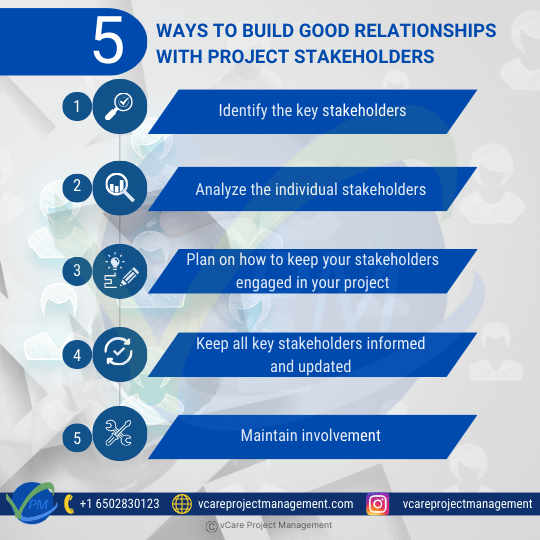
Ways to build good relationships with Project Stakeholders
View our upcoming physical bootcamps in Germany,
PgMP Berlin Bootcamp: April 07-09: https://bit.ly/3upkUkf
PfMP Berlin Bootcamp: April 12-14: https://bit.ly/3OrtQMS
View our upcoming Direct Classroom Sessions
PgMP®- http://bit.ly/2oCfpg0
PfMP® – http://bit.ly/38er2M3
PMP® – http://bit.ly/3ic7GRF
View our upcoming Online Mentoring Programs
PgMP® – http://bit.ly/2oBKQXQ
PfMP® – http://bit.ly/39jOZSf
PMP® – https://bit.ly/2BU0mFp
Join our LinkedIn Groups for the latest updates
PgMP4U – http://bit.ly/2SBPwIp
PfMP4U – http://bit.ly/31P7GKR
PMP4U – https://bit.ly/30gV5QX
Check the various offers and discounts we offer at https://bit.ly/3jWVepD
For any questions related to Project Management career, training, and certifications, you can book an obligation free 15 minutes session with leading PMP, PgMP & PfMP Mentor Dharam Singh, by visiting talktodharam.com
You can subscribe to vCare Project Management YouTube Channel to catch future videos of our Q&A series and certification success stories: https://bit.ly/2YF0wJl
You can subscribe and follow Dharam podcasts and interviews with Project Management Experts on YouTube at https://bit.ly/2NDY8wd
by vCare Project Management CW | Mar 23, 2024 | Project Management
Governmental Project Management Maturity Model (GPM3)
A maturity model is the sequence of groups (levels) of more efficient practices in any activity area. Our base area for defining maturity levels are Governmental Project Implementation and Governmental Project Management treated together as one system.
Governmental Project Management Maturity Model (GPM3)
Initial Level
Some governments are (really!) not interested in managing their projects and investments. They think it is enough to allocate the budget and set the deadline for product delivery, and people will know how to do it.
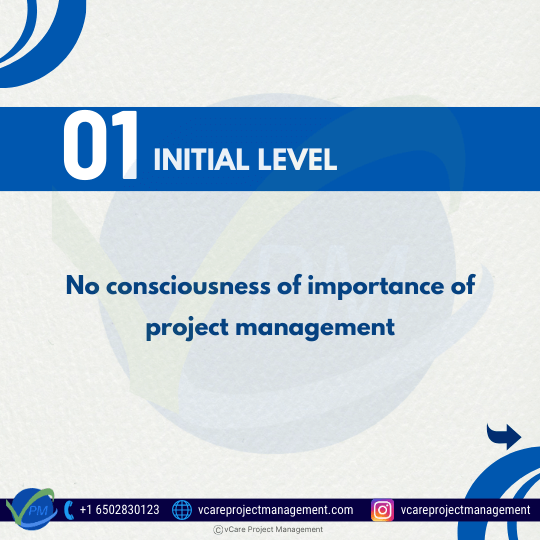
Initial Level
Local Level
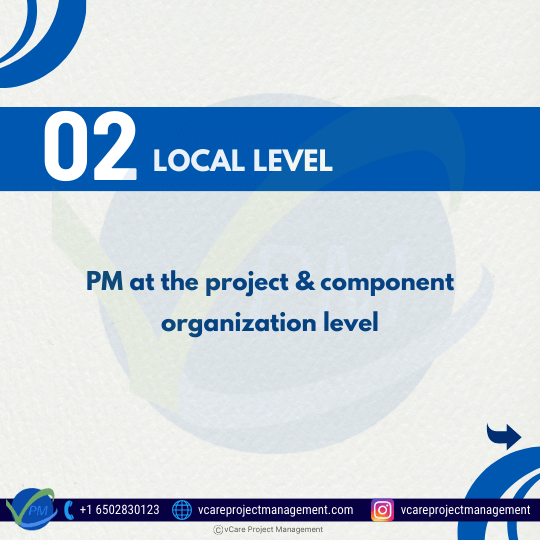
At some moment, people in individual governmental agencies and organizations, worried about continuous failures of their projects and inefficient work, learn that efficient and effective project management methods exist.
Local Level
Governmental Level
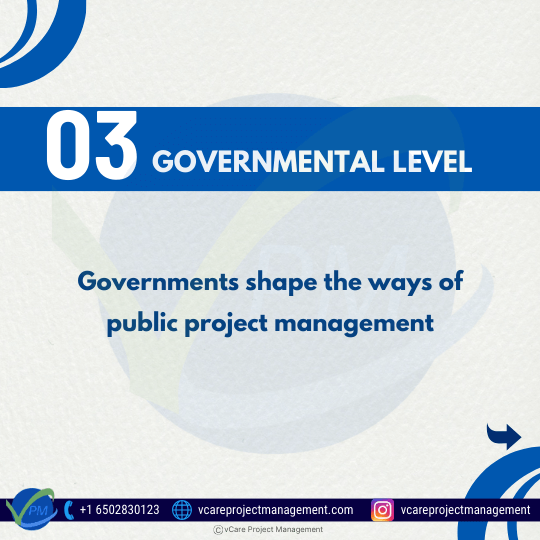
After some time, the cabinet learns that a few of its projects (either internal or foreign governments) were implemented more efficiently than anywhere else.
Governmental Level
Cooperating Level
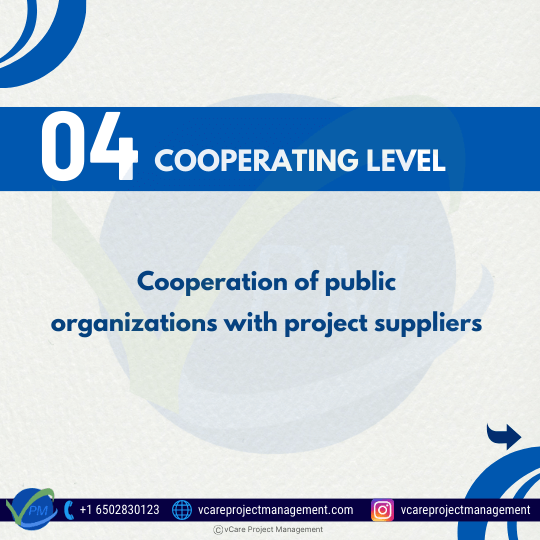
But should the government only define the ways of project implementation and passively observe the results of these processes? It is better if the government is actively involved in implementing projects, like trying to solve problems faced by – usually complex and complicated – government projects.
Cooperating Level
Optimizing Level
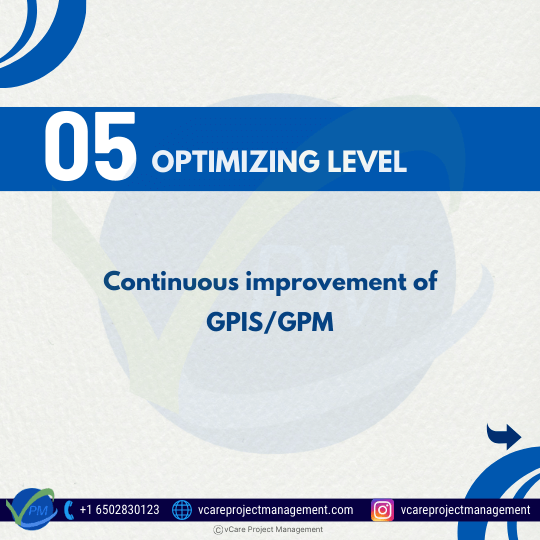
But this is not the end of the journey to the top of the ladder of maturity. Everything can always be done better (if there is such a need). The most advanced governments – such as the US Federal Government – command its ministries and agencies to improve project (and program) management processes constantly.
Optimizing Level
For more insights and professional tips, follow us on
LinkedIn – https://bit.ly/2ZmYnSL
Facebook- https://bit.ly/2QQ5u18
Instagram- https://bit.ly/3lR4ibZ
Pinterest- https://bit.ly/31XzbUz
YouTube – https://bit.ly/2YF0wJl
vCare Project Management
View our upcoming physical bootcamps in Germany,
PgMP Berlin Bootcamp: April 07-09: https://bit.ly/3upkUkf
PfMP Berlin Bootcamp: April 12-14: https://bit.ly/3OrtQMS
Check the various offers and discounts we offer at https://bit.ly/3jWVepD
For any questions related to Project Management career, training, and certifications, you can book an obligation free 15 minutes session with leading PMP, PgMP & PfMP Mentor Dharam Singh, PgMP, PfMP, PMP, RMP, SP,ACP,PBA,DASM,DASSM by visiting talktodharam.com
You can subscribe to vCare Project Management YouTube Channel to catch future videos of our Q&A series and certification success stories: https://bit.ly/2YF0wJl
You can subscribe and follow Dharam podcasts and interviews with Project Management Experts on YouTube at https://bit.ly/2NDY8wd

by vCare Project Management CW | Mar 19, 2024 | Project Management
Sustainable Project Management Approach
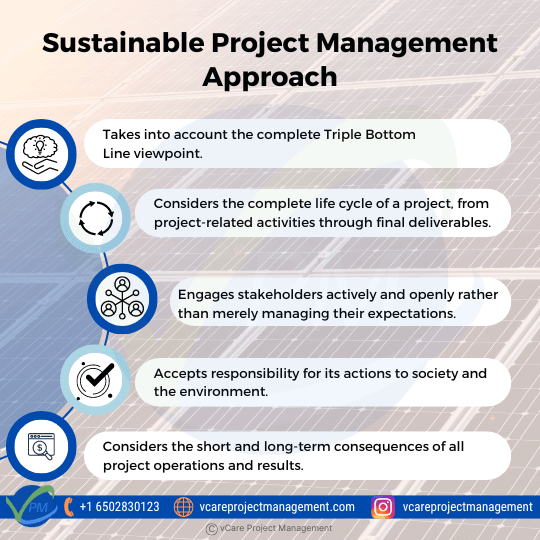
Sustainable project management is an approach that:
• Takes into account the complete Triple Bottom Line viewpoint.
• Considers the complete life cycle of a project, from project-related activities through final deliverables.
• Engages stakeholders actively and openly rather than merely managing their expectations.
• Accepts responsibility for its actions to society and the environment.
• Considers the short and long-term consequences of all project operations and results.
Sustainable Project Management Approach
View our upcoming physical bootcamps in Germany,
PgMP Berlin Bootcamp: April 07-09: https://bit.ly/3upkUkf
PfMP Berlin Bootcamp: April 12-14: https://bit.ly/3OrtQMS
View our upcoming Direct Classroom Sessions
PgMP®- http://bit.ly/2oCfpg0
PfMP® – http://bit.ly/38er2M3
PMP® – http://bit.ly/3ic7GRF
View our upcoming Online Mentoring Programs
PgMP® – http://bit.ly/2oBKQXQ
PfMP® – http://bit.ly/39jOZSf
PMP® – https://bit.ly/2BU0mFp
Join our LinkedIn Groups for the latest updates
PgMP4U – http://bit.ly/2SBPwIp
PfMP4U – http://bit.ly/31P7GKR
PMP4U – https://bit.ly/30gV5QX
Check the various offers and discounts we offer at https://bit.ly/3jWVepD
For any questions related to Project Management career, training, and certifications, you can book an obligation free 15 minutes session with leading PMP, PgMP & PfMP Mentor Dharam Singh, PgMP, PfMP, PMP, RMP, SP,ACP,PBA,DASM,DASSM by visiting talktodharam.com
You can subscribe to vCare Project Management YouTube Channel to catch future videos of our Q&A series and certification success stories: https://bit.ly/2YF0wJl
You can subscribe and follow Dharam podcasts and interviews with Project Management Experts on YouTube at https://bit.ly/2NDY8wd
by vCare Project Management CW | Mar 14, 2024 | Project Management
1. Stakeholder Analysis – Stakeholder analysis can offer insightful information and guidance. It can be helpful to respond appropriately by taking the time to consider how stakeholders affect the project’s progress.
2. Identify Stakeholders – One must first identify the stakeholders to analyze them effectively.
3. Prioritize Stakeholders – The list of stakeholders can then be ranked according to impact, interest, and power.
Methods For Dealing With Common Stakeholder Conflicts
View our upcoming Direct Classroom Sessions
PgMP®- http://bit.ly/2oCfpg0
PfMP® – http://bit.ly/38er2M3
PMP® – http://bit.ly/3ic7GRF
View our upcoming Online Mentoring Programs
PgMP® – http://bit.ly/2oBKQXQ
PfMP® – http://bit.ly/39jOZSf
PMP® – https://bit.ly/2BU0mFp
Join our LinkedIn Groups for the latest updates
PgMP4U – http://bit.ly/2SBPwIp
PfMP4U – http://bit.ly/31P7GKR
PMP4U – https://bit.ly/30gV5QX
Check the various offers and discounts we offer at https://bit.ly/3jWVepD
For any questions related to Project Management career, training, and certifications, you can book an obligation free 15 minutes session with leading PMP, PgMP & PfMP Mentor Dharam Singh, PgMP, PfMP, PMP, RMP, SP,ACP,PBA,DASM,DASSM by visiting http://talktodharam.com/
You can subscribe to vCare Project Management YouTube Channel to catch future videos of our Q&A series and certification success stories: https://bit.ly/2YF0wJl
You can subscribe and follow Dharam podcasts and interviews with Project Management Experts on YouTube at https://bit.ly/2NDY8wd